
Preparing your book…
We couldn’t load this book.
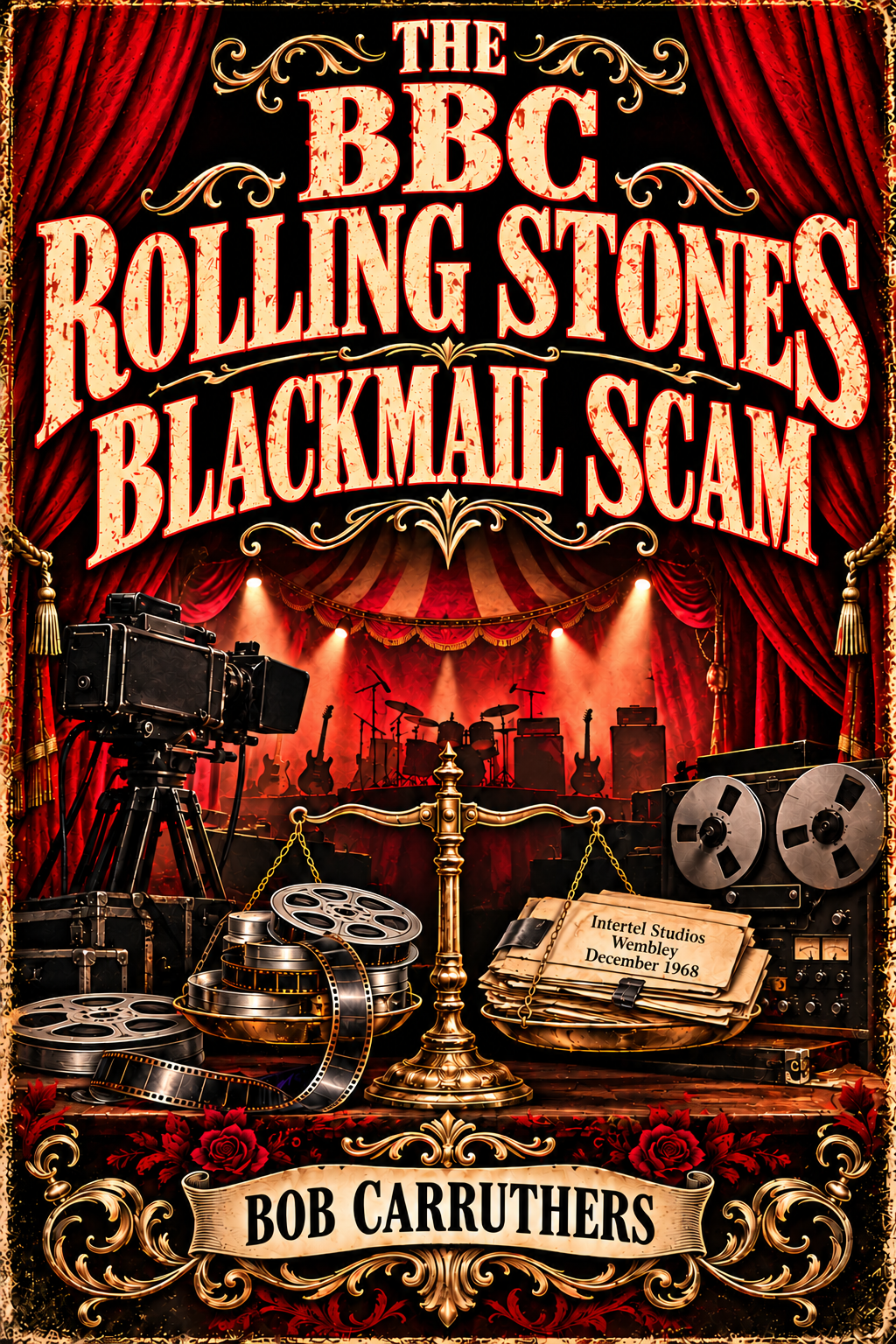
Music · Crime
THE BBC ROLLING STONES BLACKMAIL SCAM
THE UNTOLD STORY OF COPYRIGHT FRAUD, CORPORATE DECEPTION AND THE FIGHT TO EXPOSE THE TRUTH
In The BBC Rolling Stones Blackmail Scam, Emmy Award-winning investigative journalist Bob Carruthers exposes what he alleges to be a web of copyright fraud, corporate deception and legal intimidation involving some of the biggest names in the music industry.
Behind the glamour of rock and roll lies a story of disputed copyrights, powerful corporations, multimillion-dollar legal threats and an investigative journalist determined to uncover the truth.
In The BBC Rolling Stones Blackmail Scam, Emmy Award-winning investigative journalist, filmmaker and author Bob Carruthers takes readers deep into the complex world of music copyright, corporate power and alleged organised financial wrongdoing.
At the centre of this explosive investigation is The Rolling Stones Rock and Roll Circus, the legendary 1968 British film featuring some of rock music’s most celebrated performers, including The Rolling Stones, John Lennon, Eric Clapton, The Who, Jethro Tull and Marianne Faithfull.
Filmed in December 1968, the production was subsequently shelved for decades. Carruthers examines his allegation that the film and its soundtrack were created without the written performer permissions required under British law, raising fundamental questions about the legitimacy of subsequent copyright claims and commercial exploitation.
The investigation follows the film’s complicated history through decades of commercial releases, television broadcasts and competing claims of ownership.
Particular attention is given to the British Broadcasting Corporation’s broadcasts of material originating from the film, including its 1989 transmission of 25x5: The Continuing Adventures of the Rolling Stones as part of the BBC’s acclaimed Arena series.
Carruthers questions the legal foundations of those broadcasts and investigates the organisations that purported to control the underlying film and recording rights.
But the story extends far beyond a dispute over a historic rock concert film.
In March 2019, Carruthers became one of the recipients of an international copyright demand issued on behalf of several major music industry organisations. The letter threatened potential damages running into millions of dollars.
What followed was a prolonged dispute involving copyright ownership, corporate identities, legal proceedings and allegations of intimidation.
Drawing upon correspondence, court filings, copyright registrations, statutory legislation, company records and commercial documentation, Carruthers examines what he considers serious inconsistencies in the claims advanced against him.
His investigation explores the involvement of organisations associated with Universal Music, ABKCO and the BBC, questioning whether disputed ownership claims were used to support aggressive legal demands.
The book also examines the BBC’s institutional responsibilities, its commercial subsidiaries and the handling of correspondence challenging the legal authority behind certain copyright assertions.
Throughout the investigation, Carruthers returns to a fundamental legal principle: nemo dat quod non habet — no one can transfer rights they do not possess.
If the original rights were never lawfully obtained, he asks, how could subsequent organisations legitimately claim ownership, authorise exploitation or threaten legal action against others?
Combining music history, legal analysis and firsthand investigative journalism, Carruthers presents his allegations through a detailed examination of the documentary record.
The BBC Rolling Stones Blackmail Scam is more than a book about rock music. It is an investigation into corporate accountability, the use of legal power and the determination of one journalist to challenge institutions that he believes have serious questions to answer.
For readers interested in The Rolling Stones, music industry history, investigative journalism, copyright disputes and corporate accountability, this book offers a provocative examination of the business behind the music.
The allegations presented are those of the author and should not be understood as findings of criminal wrongdoing unless expressly supported by a court judgment or regulatory determination.